Here's what nobody talks about
Lubrication isn't one thing. It's not "wet enough" or "not wet enough." What actually happens is this: the amount and type of lubrication your body produces, plus the friction created by your position, position of your partner, and the angle of your vibrator all combine to create totally different sensations.
You can have plenty of natural lubrication lying down and feel bone-dry sitting up. You can use the exact same amount of lube with a partner and it feels different than solo. This isn't a sign something's wrong. It's just physics, and it means you need a strategy that adapts.
Why angle matters more than you think
When you're lying on your back, gravity helps lubrication stay where it is. Thinner tissue gets supported by gravity's pull downward. When you're sitting up or standing, lubrication migrates. It dries faster because there's more airflow and less pooling. When you're on your side or in a position where your partner is close, friction increases because there's less space and more pressure.
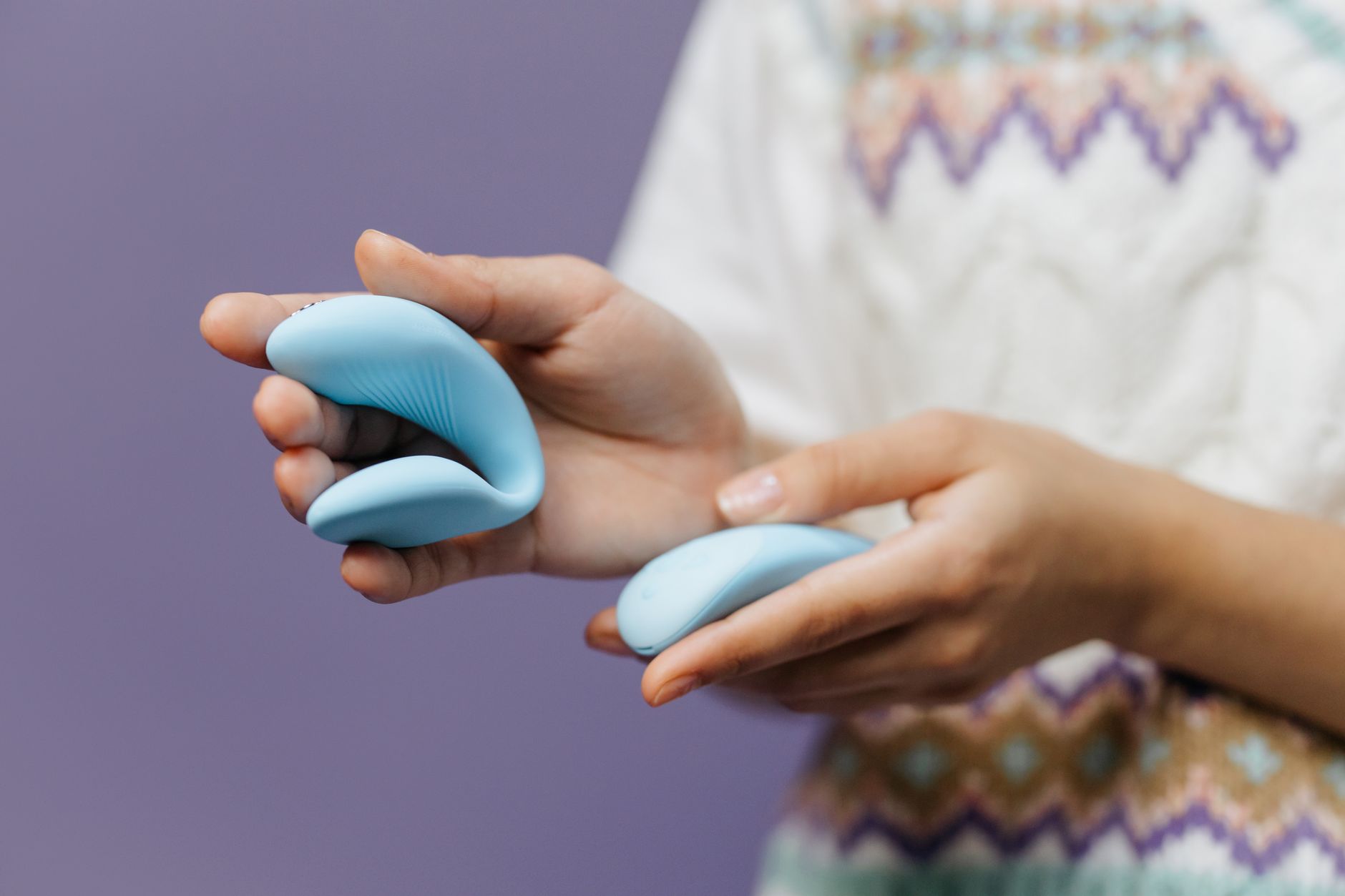
The lemon clitoral vibrator's design actually works with this. Its compact shape means you're not spreading lubrication across a huge surface area like you would with a wand. But that also means you need to be more intentional about where you apply it.
Here's the practical breakdown:
Lying down on your back or side: Start with less lube than you think you need. The air-pulse sensation of the lem vibrator works beautifully with minimal lubrication in this position. You can always add more, but too much can make it feel slippery rather than gliding. One fingertip of water-based lube, applied directly to your clitoris and the rim of the vibrator, is usually enough.
Sitting up or kneeling: Use more. Gravity is working against you. A dime-sized amount of lube is closer to baseline here, and you may need to reapply it midway through. The vibrator's opening faces downward, so lubrication can escape more easily. This is fine. Plan for it.
With a partner in the same space: This changes things because bodies generate heat and moisture when they're close. You might actually need less artificial lubrication because your partner's proximity changes your own lubrication response. But if you're both reaching down to touch, friction increases, so you may need to add lube more often.
The sticky situation: reapplication without breaking flow
Most people either use way too much lube at the start and deal with slickness the whole time, or they use the right amount and then stop midway through because reapplying feels awkward.
Here's a third option: use a thin layer to start, then keep your lube within arm's reach. A small water-based lube bottle is easier to grab than a jar. When you notice sensation changing or friction increasing, pause for two seconds, apply a small amount to your finger, dab it on, and resume.
This works because the lem vibrator's small size means you're not fighting to redistribute lube across a large surface. You're just keeping the contact point slick.
If you're with a partner, having lube accessible means they can help with reapplication without it being awkward. It becomes part of the connection rather than a interruption. "Can you add some lube?" is a normal sentence.
When your position changes mid-session
This is where positioning gets real. You might start lying down because you want to relax, then shift to sitting up because the angle changes what you're feeling and you want more intensity.
When you shift positions, your lube situation shifts too. If you're moving from lying down to sitting, you're losing gravity's help. Add lube before you move. If you're moving from sitting to lying down, you might have more lube than you need now that gravity's helping. It's not a problem, but you can wipe some away with your finger if it feels too slick.
The clitoral vibrators like the lem are good for position-changing because they're small and stable. You're not balancing a wand or worrying about angles. But the lubrication logic still applies.
Solo versus partnered: the lubrication difference
When you're alone, you control everything. You control pace, angle, pressure, and when lubrication gets reapplied. When there's a partner, lubrication dynamics shift because there's another body creating friction, heat, and potentially touching the area where you're using your lemon vibrator.
If your partner is inside you while you're using the lem vibrator on your clitoris, you have two sources of friction happening at once. Your body's natural lubrication is being used for internal friction plus external friction from the vibrator. This means you'll dry out faster and need more artificial lubrication than you would solo.
Have a conversation about this with your partner ahead of time. "I might need lube reapplied more often because we're both generating friction" is not a failure. It's information. Some partners find it hot to be the one adding lube. Others prefer you handle it. Figure that out before you're mid-session.
The texture factor: water-based versus silicone
I recommend water-based lubrication because silicone-based lubes can damage silicone toys, and most lemon sexual toys are silicone. But water-based lubes have different thicknesses, and that matters for position.
Thicker water-based lubes (cream-like consistency) stay put better when you're sitting up or in positions where gravity isn't helping. Thinner water-based lubes (slicker, more liquid) feel better when you're lying down because they don't create that heavy, sticky feeling.
If you're using the same lube for multiple positions, pick a medium-thickness option. If you have flexibility and like different lubes for different moments, keep a thicker option handy for upright positions.
One note: water-based lube absorbs into skin and can dry out if you're going for a long session. That's why reapplication matters. Every 5-10 minutes, depending on how vigorous you're being, add a small amount. It's easier to do this than to suddenly lose sensation.
Lubrication and the angle of contact
This gets technical but it matters. The lem vibrator's oval opening creates suction across your clitoris. When you're at different angles, that suction interacts differently with lubrication.
When you're lying flat and the vibrator is directly perpendicular to your clitoris, suction is even across the whole opening. When you're at an angle (sitting up, tilted to one side), the suction can be stronger on one edge of the opening than the other. This isn't bad. Some people prefer it because it creates varied sensation. But it can also create dry spots if lubrication isn't distributed evenly.
Before you start, rub a tiny bit of lube around the entire rim of the vibrator opening, not just the top. This takes five seconds and ensures that whatever angle you're at, lubrication is there. Then, as you go, you're maintaining rather than starting from scratch.
When to add lube mid-session without losing momentum
The goal is to add lubrication smoothly so it doesn't feel like an interruption. Here's the rhythm that works:
Notice: you'll feel friction increase or sensation drop. This is your cue.
Keep going: don't stop immediately. You have about 30 seconds of warning before it becomes uncomfortable.
Reach: grab your lube bottle. This should take 2-3 seconds because it's within reach.
Apply: a pea-sized amount on your finger, dab it on the area or the vibrator rim, maybe 2-3 seconds.
Resume: your vibrator doesn't have to leave your body for this whole process. You're adding lube while maintaining position and sensation.
This works because the lem vibrator is small enough that you can operate it one-handed if needed. You're not trying to reposition a large wand or restart something complicated.
Partner communication around lubrication adjustments
If you're with a partner and your lube needs are changing based on position, the conversation might go like this:
"When we shift positions, my lubrication needs change. If I ask for lube, can you just apply a little and we'll keep going?" Clear, specific, easy.
Or: "I'll manage the lube on the vibrator. You manage yourself." Also clear.
Or: "Let's use lube as part of foreplay. Add it slowly." Different vibe entirely.
The point is to decide this before you're in the moment. Lubrication adjustments are not a mood-killer if they're expected.
Real talk: what's normal
Here's what I see in my practice: people assume their body should produce the same amount of lubrication regardless of position, activity, what they ate, stress level, cycle day, or medication. It doesn't. Variation is completely normal.
Using lube isn't a sign your body isn't working. It's logistics. A lemon adult toy like the lem vibrator works best when there's adequate lubrication, and adequate changes based on what you're doing. Adapt to that instead of fighting it.
The pleasure is in the adjustment, not despite it.
FAQ: Lubrication and positioning
How much lube should I use with my lemon clitoral vibrator?
Start with a pea-sized amount if you're lying down, a dime-sized amount if you're sitting up. You can always add more. Too much actually reduces sensation because the vibrator loses direct contact with your tissue. The goal is enough to glide smoothly without pooling.
Can I use silicone-based lube with my lemon vibrator?
No. Silicone lube damages silicone toys. Stick with water-based lubrication. It's compatible with all materials and absorbs into skin naturally.
Why do I need more lube when my partner is involved?
Your body's natural lubrication is being used for both internal friction (if your partner is inside you) and external friction (the vibrator). Two friction points means lubrication gets depleted faster. Artificial lube compensates for this.
Does lube wash away if I'm using a lemon sucker-style vibrator?
Water-based lube is designed to work with your body's natural moisture, so some absorption happens. This is normal. Reapply every 5-10 minutes during a longer session. Think of it as maintenance, not failure.
What if I'm sensitive to typical water-based lubes?
There are hypoallergenic water-based lubes with fewer additives and fragrance-free options. Patch-test on your inner arm first. Some people do better with thicker lubes (cream-like), others with thinner ones. Experiment to find your preference.
Can I use coconut oil or other natural lubricants with my lemon vibrator?
Coconut oil and other oil-based lubes damage silicone. Only water-based lube is safe. It's worth finding one you like because that's your only compatible option.
What changes tomorrow
Try this: next time you use your lemon clitoral vibrator, start with less lube than you think you need and notice where you feel that shift from comfort to friction. That's your body telling you what baseline is. Once you know your starting point, positioning changes become easier to manage.
You're not broken if lube needs change. You're just paying attention to what your body is telling you. That's the whole game.
If you're navigating lube adjustments with a partner and it feels awkward, exploring how lemon vibrators work in partnered sex can help you both get on the same page. Or if lubrication inconsistency is tied to your cycle, understanding how that shifts throughout the month gives you even more control.
Your comfort matters. Your pleasure deserves this attention.