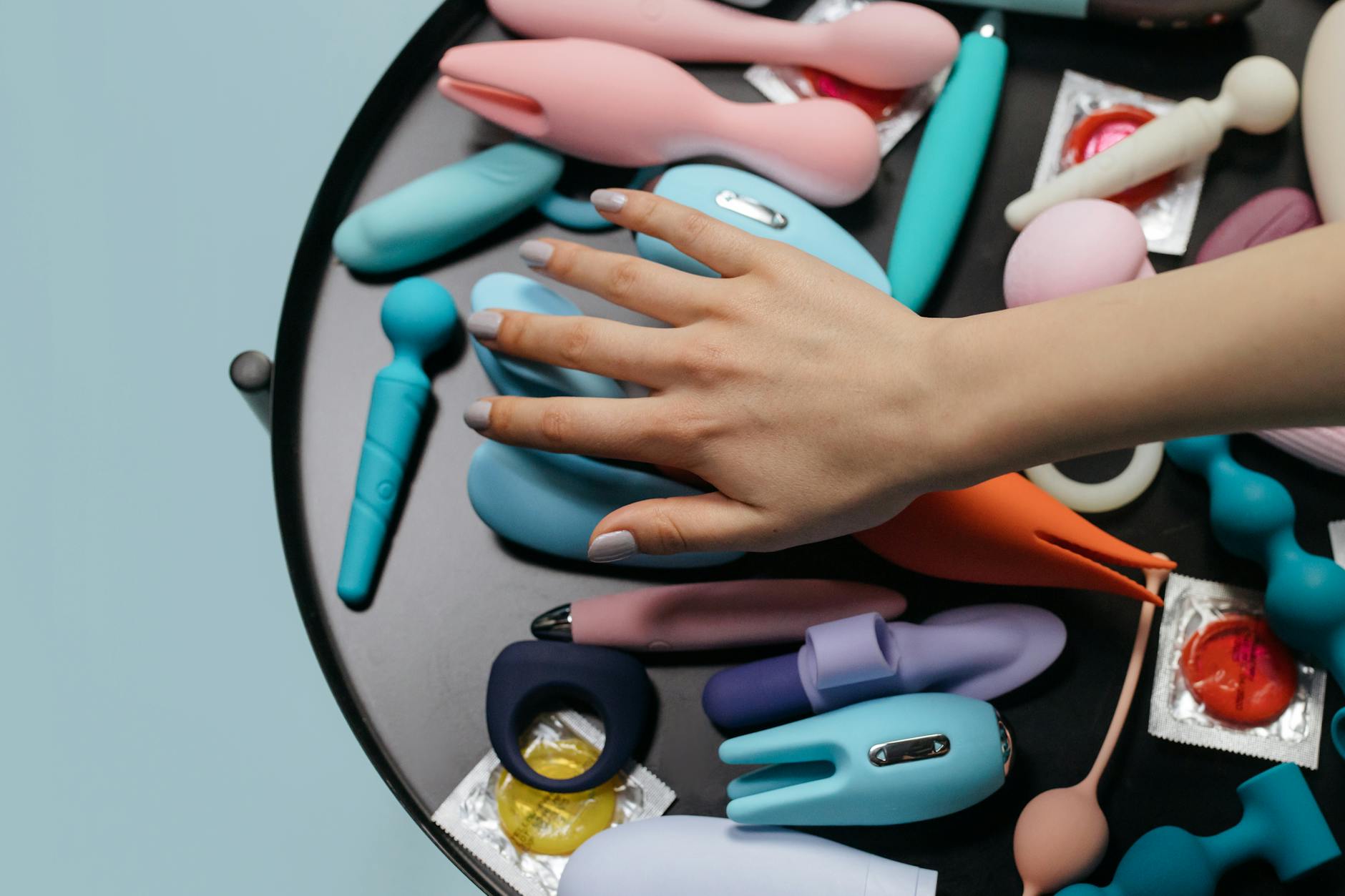
Let's name the thing nobody says out loud
Your partner doesn't want toys in bed. Or they're nervous. Or they think toys mean something about their capacity that feels like a personal hit. And you want to try a clitoral vibrator like the Lem, which means you're stuck between two unbearable positions: ask directly and feel like you're criticizing them, or say nothing and resent them quietly for years.
Neither has to happen. There's a third path, and it starts with understanding why the resistance exists in the first place.
Why partners resist toys (and it's rarely about the toy)
I've had this conversation with hundreds of couples. The resistance isn't usually about the vibrator itself. It's about what they think the vibrator means.
For some, it feels like a referendum on their performance. "If you need a toy, I'm not doing my job." For others, it triggers old anxieties about adequacy or fear they'll be replaced. Some partners grew up with messaging that toys are shameful, and they've internalized that shame without realizing it.
A few are just uncomfortable with the unfamiliar. They've never seen one, never thought about it, and the idea of incorporating something new into an intimate space feels destabilizing.
Here's what matters: none of these reasons are logical, and all of them are real. You can't logic someone out of a feeling they didn't logic themselves into.
The conversation framework that actually works
Timing is everything. Don't bring this up during sex, in the dark, or when either of you is tired, stressed, or distracted. Pick a moment when you're both calm, clothed, and you have privacy. Over tea at the kitchen table works better than pillow talk.
Start with your own experience, not their shortcomings. "I've been thinking about trying a clitoral vibrator, and I wanted to talk to you about it" is wildly different from "I need more stimulation than you're giving me."
Then get specific about what you're actually asking. Are you asking to use it solo? During foreplay? During sex together? Each of these is a different conversation with different boundaries. Be clear.
Next, invite their concerns directly. "What's your worry about this?" or "What does this bring up for you?" This does three things: it shows you're not trying to ambush them into agreement, it lets you address the actual fear instead of the surface objection, and it gives them permission to be honest.
Listen without defending. If they say "I feel like I'm not enough," your job is not to convince them that's irrational. Your job is to say, "I hear that, and here's what's actually true for me." Then name it plainly: "This isn't about you being inadequate. It's about my body and what brings me pleasure. Those are separate things."
Introducing the Lem without pressure
If your partner is game to learn more, start by demystifying the thing. Show them a clitoral vibrator like the Lem. Let them hold it. Run it over their own arm so they can feel what it actually does. No suction, no vibration yet. Just the weight of it.
Talk about what it does mechanistically. Lemon suction toys use gentle air-pulse suction, which is different from traditional vibration. You're not replacing anything your partner does. You're adding a sensation that's literally impossible to replicate with fingers or a penis. It's not better or worse. It's different, in a way that your body responds to.
Then propose a very small test. Not full integration into sex. Something like, "What if I used it during foreplay while you're touching me elsewhere?" or "What if I used it solo in front of you, so you can see what I'm responding to?" Small experiments feel less threatening than "let's add this to everything going forward."
If your partner watches you use the lemon clitoral vibrator, something shifts. They see your face. They see your pleasure. They see that you're not abandoning them or checking out. You're still there, still responsive, still with them. Many partners' resistance dissolves entirely once they witness this.
The role of solo play in shifting the conversation
Honestly, sometimes the most powerful move is to use the lemon vibrator alone, and then tell your partner about it. "I tried it last night and had this incredible orgasm. I want to keep exploring that."
This reframes the entire conversation. You're not asking for permission. You're not making it about them. You're claiming your own pleasure as a non-negotiable part of your life, and then inviting them to be part of it. That's a fundamentally different power dynamic than asking them to accept something they're uncertain about.
A lot of partner resistance softens when they realize this isn't a negotiation where their approval is required. It's a statement about your body and your sexuality. They can participate or not, but it's happening either way.
What happens when resistance doesn't budge
Sometimes a partner needs time. Sometimes they need reassurance multiple times before it lands. That's okay. You can move slowly.
But sometimes a partner digs in. They say no, repeatedly, and they're using it as a way to control what you do with your body. That's a different problem. That's not about the toy. That's about consent and bodily autonomy and whether your pleasure matters in the relationship. That's worth addressing with a couples therapist, because it won't stay isolated to the toy conversation.
If you're in a relationship where your partner won't allow you to explore your own sexuality solo, that's information. Write that down. Name it. And consider whether you want to stay in a dynamic where you don't have agency over your own body.
When your partner comes around
If and when your partner shifts from resistant to curious, don't make it a huge deal. Let it be natural. Introduce the vibrator into your sex life without ceremony. Use it, enjoy it, and let them watch or touch you or be inside you while you use it. No performance necessary.
Some partners will ask to use it on you. Some will be content to watch. Some will become just as enthusiastic as you are. None of these outcomes is "better." What matters is that you get to have pleasure, and your partner gets to be part of that without shame.
Over time, partners often realize that lemon sexual toys have nothing to do with their adequacy. They're just another way to feel good. That's it. The fear dissolves because the actual experience is so much smaller and more intimate than the fantasy of what the toy "means."
The long view
I've worked with couples where the introduction of a clitoral vibrator became a turning point. Not because the toy is magic, but because the conversation that precedes it opens something up. It forces you both to talk directly about pleasure, desire, and what your body needs. That conversation is hard. But it's also the foundation of better sex and deeper intimacy.
A lemon clitoral vibrator won't save a broken relationship. But the willingness to talk about what you want, to listen to your partner's fears, and to keep your own pleasure non-negotiable? That can transform everything.
Your body deserves pleasure. Your partner deserves to understand what that means. The vibrator is just the vehicle for that conversation.
People also ask
How do I bring up toys to a partner who thinks they're cheating?
First, separate the idea of a toy from the idea of infidelity. Using a vibrator solo is not cheating. Using one with a partner is something you're both consenting to, which is the opposite of cheating. If your partner equates toys with betrayal, that belief usually comes from somewhere older and deeper than the toy itself. A couples therapist can help you both untangle that connection.
What if my partner is okay with toys but uncomfortable watching?
That's totally fine. Not everyone wants to witness their partner's solo pleasure, and that's valid. You can use the vibrator in private and they don't need to be present. Some couples find that works beautifully. The key is that the toy gets to exist in your sexual life without needing their approval or participation.
Will using a lemon vibrator make my partner feel inadequate?
Possibly, at first. But if they work through the fear instead of avoiding it, they usually realize that your orgasm and their performance are separate variables. A vibrator can make you come faster or feel sensations they can't create. That doesn't mean they're failing. It means your body has preferences, and pleasure is a spectrum.
How do I know if my partner is pretending to be okay with toys when they're not?
Watch for resentment. If they agree but then become distant, passive-aggressive, or less engaged, something's unresolved. A partner who's genuinely okay will be curious, involved, or at least neutral. A partner who's faking it usually shows up as either withdrawn or performing enthusiasm. Name it: "I feel like something's off. Are you really okay with this, or is there something we haven't talked through?"
Can a lemon vibrator help us reconnect if we've drifted apart?
Maybe, but it's not a fix. If you've drifted, the toy might open a conversation about pleasure and intimacy that helps you reconnect. But the toy itself isn't the therapy. The willingness to talk about what you need, what your partner needs, and what you both want sexually — that's what heals distance. The Lem or any clitoral vibrator is just the excuse to have that conversation.
What if we try it and my partner hates it?
Then you stop using it in that way. Or you use it alone. The toy doesn't have to live in partnered sex if it doesn't work for you both there. You get to have pleasure. Your partner gets to have boundaries. Both things can be true.