Let's start with what's actually happening
So your partner doesn't want penetration. Maybe they never have. Maybe they used to, and something shifted. Maybe it's anxiety, or pain, or just the simple fact that external stimulation feels better. Here's the thing nobody frames correctly: that's not a limitation. That's actually the doorway to some of the best partnered sex available.
Most people with vulvas orgasm more reliably from external clitoral stimulation than from anything internal. The clitoris has 8,000 nerve endings concentrated in a space smaller than a pea. Penetration stimulates maybe a fraction of that. So when your partner says they prefer external play, they're often saying: "This works better for my body." That's not a problem to solve. That's information.
The shift happens when both of you stop thinking of external play as foreplay and start thinking of it as the main event. Because it is.
Why lemon vibrators change the dynamic
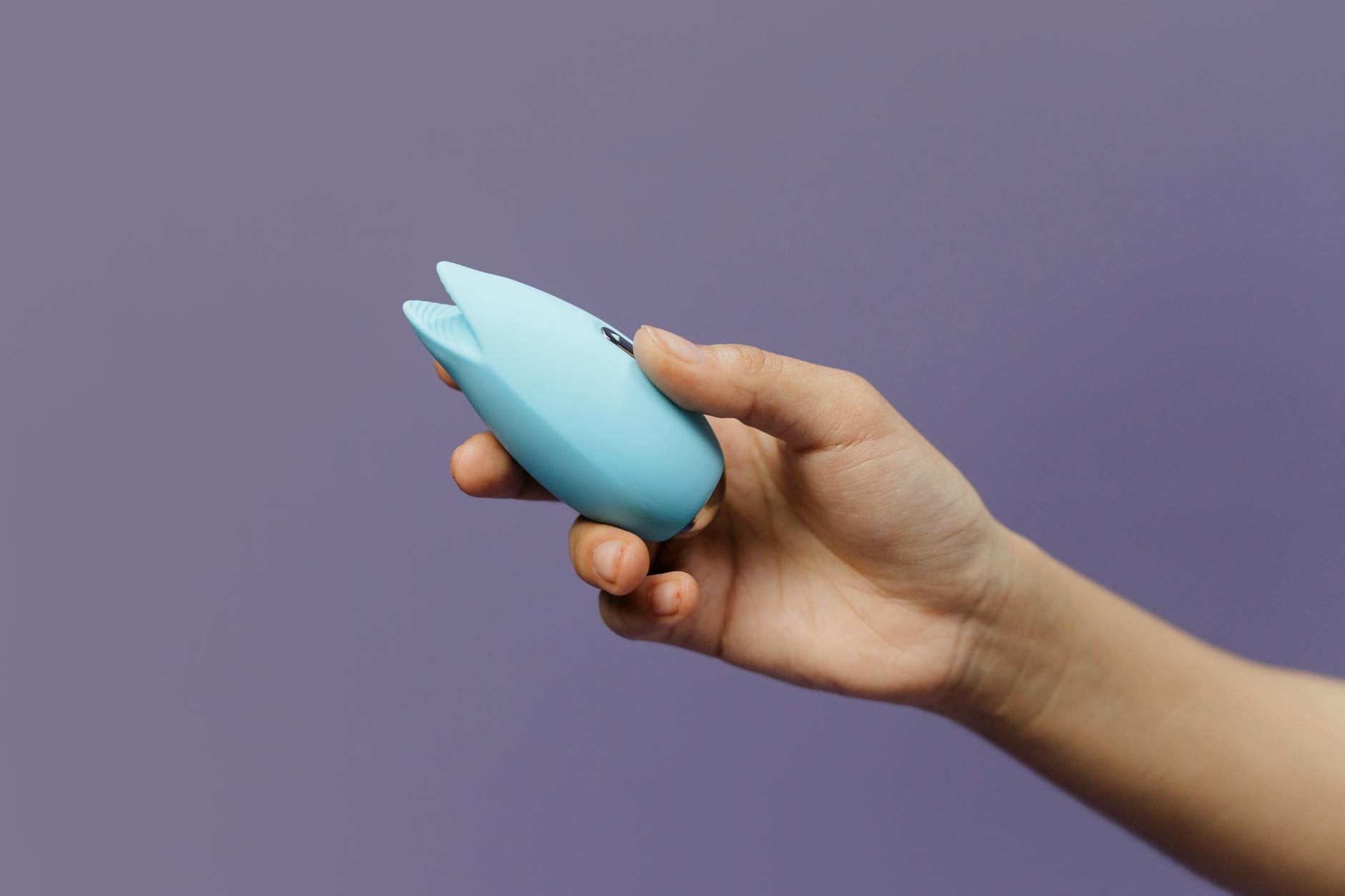
Air-pulse clitoral vibrators like the Lem work differently than traditional vibrators. Instead of buzzing against the clitoris, they create a rhythmic suction sensation that simulates oral sex. This matters for partnered play because it stays consistent, doesn't numb, and feels incredible in a way that's much harder to achieve with hands alone.
For couples, this shifts the whole vibe. One of you isn't exhausted from repetitive motion. There's less pressure to perform a specific technique. You can actually be present together instead of performing a mechanical routine.
The Lem, in particular, was designed with this in mind. It has seven distinct patterns, each one adjustable from gentle to intense. That means you're not locked into one sensation. You can explore together, find what actually works, and adjust in real time without anyone having to do anything uncomfortable.
Setting up for success as a couple
Before you even touch the toy, agree on what you're both actually trying to happen here. Are you looking for your partner to orgasm? Are you looking to explore sensation together? Are you trying to rebuild confidence after some kind of disruption? The answer changes everything about how you approach it.
Then, talk about speed. This is specific and weird but important: people often think they know their own body's rhythm, then discover they've been going too fast or too slow because they were either nervous or overthinking. With the Lem, start on pattern 1 or 2. Let your partner feel it. If they say "stronger," you have six more levels to play with. You're not guessing.
Consent check: whoever is holding the toy should ask out loud, not assume. "Is this intensity working?" or "Should I try pattern 4?" Sounds clinical, but it's actually the opposite. It breaks the silence that makes people clam up. It turns physical feedback into conversation.
The pleasure-sharing setup that actually works
There are a few positions worth knowing about.
The first is the simplest: your partner lying on their back, legs relaxed or slightly open, you sitting or lying beside them with the Lem in hand. This gives you control, lets you watch their face, and lets them relax completely. You're not trying to balance or thrust or do anything but be present and adjust the sensation based on what you see and hear.
The second is facing each other, ideally with your partner reclined slightly so you can reach comfortably. This works better if both of you want to be touching each other too, not just focused on the toy. Hands on skin, eye contact, the toy as one element in a larger connection rather than the whole focus.
The third is side-by-side, which works if you want long, exploratory sessions without anyone's arms getting tired. You can kiss, talk, rest your head on them. It doesn't feel goal-oriented the same way.
None of these is "right." The right one is the one that lets both of you feel comfortable, present, and able to adjust if something isn't working.
What to actually do with your hands
If you're holding the lemon vibrator, your other hand isn't doing nothing. Touch their skin. Kiss their neck. Hold their hand. Look at them. These sound obvious until you realize how many people default to focusing so hard on the toy that they go robotic.
The toy isn't the whole experience. It's one element. If your partner is someone who gets anxious when they're being "performed to," then your presence matters more than your technique.
If they like more sensation, you can use your free hand to gently touch or stimulate other areas. Inner thighs, breasts, lower belly. The point is variety. The Lem handles intense clitoral stimulation beautifully, but the body has a lot more to offer. Switching between the toy and your hands keeps everything from getting either too focused or too numb.
The communication that changes everything
During, ask questions. "How does that feel?" "Should I slow down?" "Do you want me to try a different pattern?" Your partner shouldn't have to guess whether it's safe to say "more" or "less" or "I need a break." If you create a culture where checking in is normal and expected, they relax. And relaxed bodies feel pleasure better.
After, actually talk about it. Not in a clinical review way, but in a "what did you like?" way. What pattern felt best? What would you want to try next time? Did you like having me watch, or would you prefer I look away at some point? These conversations sound weird the first time. By the third or fourth time, they become how you stay connected.
When external stimulation brings up feelings
For some people, especially if there's been past pain or pressure around penetration, focusing entirely on external play can trigger complicated stuff. Maybe it feels like failure. Maybe it brings up rejection or inadequacy. These feelings are real and also not about the sex itself.
If this is happening in your relationship, slow down. It's worth having a conversation not about the sex but about the feelings underneath. What does penetration mean to them? What does it mean to you? Is there grief, or fear, or pressure that's sitting just under the surface? Rebuilding desire after long-term relationship fatigue sometimes requires stepping back from the physical stuff to address what's actually going on emotionally.
This isn't failure. This is you both being real about what sex means in your relationship, which is the foundation everything else builds on.
Practical stuff: lubrication and comfort
Use lube. Yes, every time. Even if natural lubrication is happening. Lube makes the sensation smoother, lets you adjust intensity without friction becoming uncomfortable, and signals to your partner that this is a pleasure thing, not a performance thing.
Water-based lube is safest with silicone toys like the Lem. Silicone-based lubes can degrade silicone toys over time. Keep the water-based stuff in easy reach. You don't want to kill the mood hunting for it.
Comfort also means having somewhere soft to lie, good lighting that doesn't feel medical, maybe a towel nearby if you want one. This isn't about making it fancy. It's about removing the small discomforts that make brains go "wait, is this okay?" when they should be focused on sensation.
Also, temperature matters more than people think. If your partner is cold, they won't relax. If the room is too warm, they'll get uncomfortable. These sound like details, but they're the difference between "that was nice" and "that was actually incredible."
Widening the window of what counts as sex
Here's what I've seen happen in relationships where one partner prefers external stimulation: once couples stop treating it like a compromise and start treating it as the actual sex, everything shifts. It's not "we can't do penetration, so we're doing this instead." It's "this is what we do together, and it's genuinely satisfying for both of us."
Lemon vibrators make this easier because the sensation is so consistently good that there's nothing to "endure" or "make work." Your partner isn't grinding their teeth through foreplay waiting for the "real thing." This is the real thing.
That takes pressure off you too. You're not responsible for making something work that doesn't work for their body. You're just present with what does work. And that's a completely different energy.
People also ask
Can I use a lemon clitoral vibrator during penetrative sex with my partner?
Yes, absolutely. If your partner wants penetration and external stimulation at the same time, the Lem works beautifully for that. The toy can be held by either of you, positioned against the clitoris while penetration is happening, and it doesn't get in the way because it's small and focused. This is actually one of the most common uses.
What if my partner wants penetration sometimes but not always?
Then sometimes you do penetration and sometimes you don't. This isn't complicated. Talk about what they want each time. "What are you in the mood for tonight?" The Lem and other lemon vibrators give you flexibility to meet your partner wherever they are, rather than locked into one routine.
How do I know if the Lem is the right toy for partnered play?
The Lem is specifically designed to be held by a partner or used solo. It's small, easy to control, and the suction sensation works equally well whether you're using it on yourself or someone else is using it on you. If you're shopping for partnered external play, this is the gold standard. That said, you know your partner best. If they like something different, that's valid too.
What if my partner gets numb after a while with the vibrator?
This usually means the intensity is too high or you've been using it for too long. Try starting at a lower pattern and checking in frequently. Some bodies need variation, so switching between patterns or taking breaks to use hands can help. If numbness persists, that's worth mentioning to a doctor, as it can sometimes signal something else going on.
Can external stimulation lead to orgasm for my partner?
Yes. In fact, most people with vulvas orgasm more easily from external clitoral stimulation than from penetration alone. The challenge is usually pressure or anxiety, not the sensation itself. When you remove the pressure and focus on what feels good, orgasm usually follows. It might take longer than your partner expects, which is fine. Patience and exploration matter more than speed.
Is it okay if my partner wants to use the vibrator solo sometimes instead of with me?
Completely okay. Solo play and partnered play are different experiences, and your partner might want both. In fact, knowing how to pleasure themselves with the Lem solo actually helps partnered play, because they know what patterns and rhythms work best for their body. You can learn from that.
The short version: when one partner prefers external stimulation, that's not a problem to fix. That's your actual best path to shared pleasure, especially when you're using tools like lemon vibrators that are specifically designed for it. Stop thinking of it as a compromise and start thinking of it as the main event. Everything changes once you do.