
Let's be real about first relationships
Your first serious relationship as an adult is not the place where most people naturally say "I want to use a vibrator with you." The vulnerability is amplified. You're learning how to be close to someone, how to ask for what you want, how to be present without your brain spiraling into worry about whether you're doing it right. Adding a sex toy to the mix feels like adding risk to an already precarious situation.
Here's the thing though. A lemon clitoral vibrator actually reduces that risk. It gives you permission to stop performing and start communicating.
Why lemon vibrators change the dynamic with a new partner
When you're navigating pleasure with someone for the first time, there's usually an unspoken script. You think you know what's supposed to happen, what turns people on, what feels good. Most of that script is wrong or at least wrong for you specifically. A lemon vibrator interrupts that script in the best way possible.
Using air-pulse lemon sucker technology means the stimulation is consistent and external. Your partner isn't responsible for "making you come." That pressure lifts immediately. Instead, a lemon vibrator becomes a tool you both use together, which frames pleasure as collaborative rather than performative. Your partner isn't failing if your body takes time to respond. The device is doing what it does, and you're both watching what happens.
That shift changes everything about the conversation. Suddenly you're not performing for someone. You're exploring something together.
The confidence conversation before you bring it up
Before you even mention a vibrator, get honest with yourself about what you actually want. Not what you think you should want. Not what you've been told is normal or appealing. What does your body actually respond to?
Most people don't know this yet in their first real relationship. You're learning your own body alongside learning someone else's. That's not weakness. That's reality. Write it down if you need to. "I don't know if I can orgasm easily with partners. I think I might need direct clitoral stimulation. I'm nervous about that." Whatever it is.
Now you have language. Language is power in relationships.
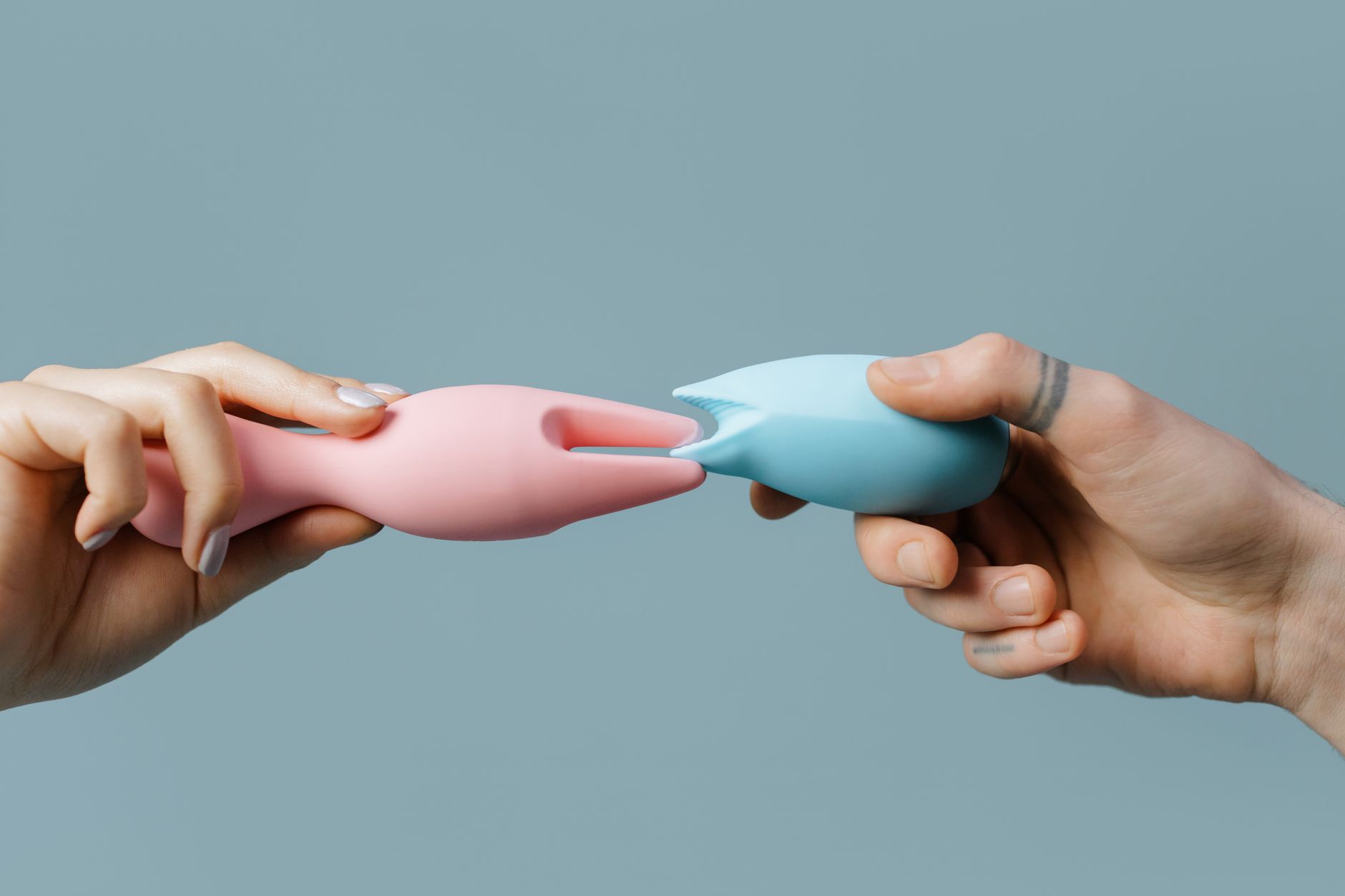
Photo by cottonbro studio on Pexels
How to actually bring it up
Don't frame it as a problem. "I need a vibrator because you're not doing it right" will detonate the conversation. Instead, frame it as information. "I've been thinking about what makes my body feel good, and I think direct clitoral stimulation helps me get there faster. I'd like to try using a vibrator together. Would that feel okay for you?"
That's not asking permission. You're stating a preference and checking if your partner is willing to explore it with you. Big difference.
Most partners will say yes. Some will need a moment. A few will get defensive, which is information about them, not about the rightness of your request. Your body's pleasure matters. If someone makes you feel bad for wanting that, that's a relationship problem, not a vibrator problem.
If your partner says yes, you get to have the next conversation. "What appeals to you about this? Do you want to be involved, or do you want me to use it solo while you watch? Should we set a time to try it together, or does it feel more natural to happen in the moment?"
Yes, you're talking about logistics. That feels unsexy. It's actually the sexiest thing you can do because it means you're both on the same page.
Setting the stage for your first time
Don't try this when you're already in bed together for the first time with a vibrator in hand. That's too much unpredictability at once. Instead, choose a moment when you're both relaxed and have privacy. Afternoon. After a shower. You've eaten. No time pressure.
Talk through the basics before you start. "I want to show you how this feels for me. You don't have to do anything. Just be here. If at any point this doesn't feel right for you, we stop. Same if it doesn't feel right for me."
Then actually use it. Not to perform. To explore. Start at a lower intensity setting on your lemon clitoral vibrator. You're not racing to come. You're showing your partner what your body responds to. What feels good. Where you like the sensation. Your partner watches. Learns. Maybe touches you elsewhere. Maybe just holds your hand.
This takes the pressure off orgasm as the endpoint. It's just information gathering. It's intimate.
What happens when you actually use it together
Some people come quickly with a lemon vibrator present. Some people find it harder because now there's an audience. Both are normal. Your nervous system doesn't care about what's supposed to happen.
If you don't come, that's genuinely fine. You learned something about what your body responds to in this context with this person. That's useful. Do it again another time. Try a different setting. Try it in a different position. Try it while your partner uses their hands on you elsewhere.
If you do come, that moment is actually really important relationally. Your partner just watched you experience pleasure. Watched your body respond. That's vulnerable and connecting in a way that doesn't happen when you're both performing for each other.
Afterward, talk about it. "That felt good because..." or "I was too self-conscious because..." or "I want to try that again." The conversation matters as much as the experience.
Managing the mental load
One thing that trips up people in first relationships is the belief that if they need a tool to feel pleasure, they're broken or their partner isn't doing enough. That's not how bodies work. Some people need direct clitoral stimulation. Some people need a partner's hand. Some people need a combination. None of those variations mean anything is wrong.
Use the lemon vibrator because your body responds to it. Not because you're compensating for a deficiency in your partner or yourself. That's the only sustainable mindset.
When to bring it into regular sex
After your first conversation and exploration goes well, you get to decide whether this becomes a regular thing. Some couples integrate vibrators into every encounter. Some use them occasionally. Some use them solo and partnered sex stays vibrator-free. All of those are fine.
What matters is that you've built a communication pattern where you can ask for what your body needs without shame. That's the real win of introducing a lemon clitoral vibrator early in a relationship. You're practicing honesty about pleasure from the start.
You're also learning that your partner can hear you, accept what you need, and engage with it. That's trust. That's the foundation for everything else.
The bigger picture
Your first adult relationship sets a template for how you approach vulnerability and communication. If you can ask for what you need around pleasure now, you can ask for what you need in other parts of the relationship too. If you learn that your partner responds with curiosity rather than defensiveness, you learn to trust them.
A lemon vibrator isn't about the vibrator. It's about building a relationship where both people's bodies and desires matter equally. Where you don't have to perform. Where you can say "this is what I need" and be heard.
That's the relationship most people actually want. It just takes practice to build.
People also ask
Is it normal to need a vibrator in your first real relationship?
Completely normal. Most bodies need direct clitoral stimulation to orgasm easily, and fingers or partners often can't sustain that pressure for as long as your body needs. A lemon clitoral vibrator just gives you the tool your body actually wants. There's nothing broken about that. You're learning what you like, and that's the whole point of being in a relationship with another adult.
Will my partner feel threatened if I use a vibrator?
Some partners will, especially if vibrators haven't been part of the conversation. Most won't, especially if you frame it as exploration rather than substitution. The key is making your partner part of the decision. "I want to try this together" reads very differently than "I bought this and will use it whether you're comfortable or not." Invite them in, and most people become curious rather than threatened.
Should I use a lemon vibrator solo first before using it with my partner?
That's your call. Some people like to learn their own response first so they feel confident when a partner is watching. Others prefer to explore it together from the beginning so there's no performance anxiety or expectation management. Neither approach is wrong. Go with what feels less risky to you emotionally.
What if I still can't orgasm even with a lemon vibrator and my partner present?
Then you've learned something valuable. Your body might need more time, different pressure, different mental space, or a combination of factors. The vibrator didn't fail. It's just one tool. You might need to explore what else supports your arousal. That's worth having another conversation about, and that's exactly the kind of ongoing communication that builds real intimacy over time.
How do I know if my partner is actually okay with this or just pretending?
Watch for actual curiosity. Does your partner ask questions about how it works? Do they engage during the experience? Do they follow up afterward? If you're getting one-word answers and they seem withdrawn, that's worth addressing directly. "I want to make sure you're genuinely comfortable with this. If you're not, we can talk about why." Some people need time to adjust to the idea. Some people will never be comfortable, and that's information too.
Can using a vibrator make it harder to orgasm with just a partner later?
No. Your body doesn't become dependent on vibration. But you might become more aware of what actually works for you, which means you might become less willing to settle for sex that doesn't include that stimulation. That's not a drawback. That's you learning to advocate for your own pleasure, which is exactly what a healthy relationship needs.
The real reason this matters
Your first relationship teaches you how to be in relationships. If you learn that your body's needs are valid. If you practice asking for what you want. If you experience a partner responding with curiosity instead of defensiveness. You're building a template for every relationship that comes after.
A lemon vibrator is just a tool. But it's a tool that lets you practice honesty and vulnerability in the safest possible way. And that practice changes how you show up in relationships forever.
Ready to explore what works for your body? Consider connecting with our care guides at /contact if you want personalized recommendations. You deserve a relationship where your pleasure isn't negotiable.